(I wrote this devotional for a Christmas celebration for some young women living in some very hard places. I hope that the truths from Scripture you read here might encourage you wherever you are today. God wants all of us to come to Him in faith every day, no matter where we’ve been in days past or might be headed in the future.)
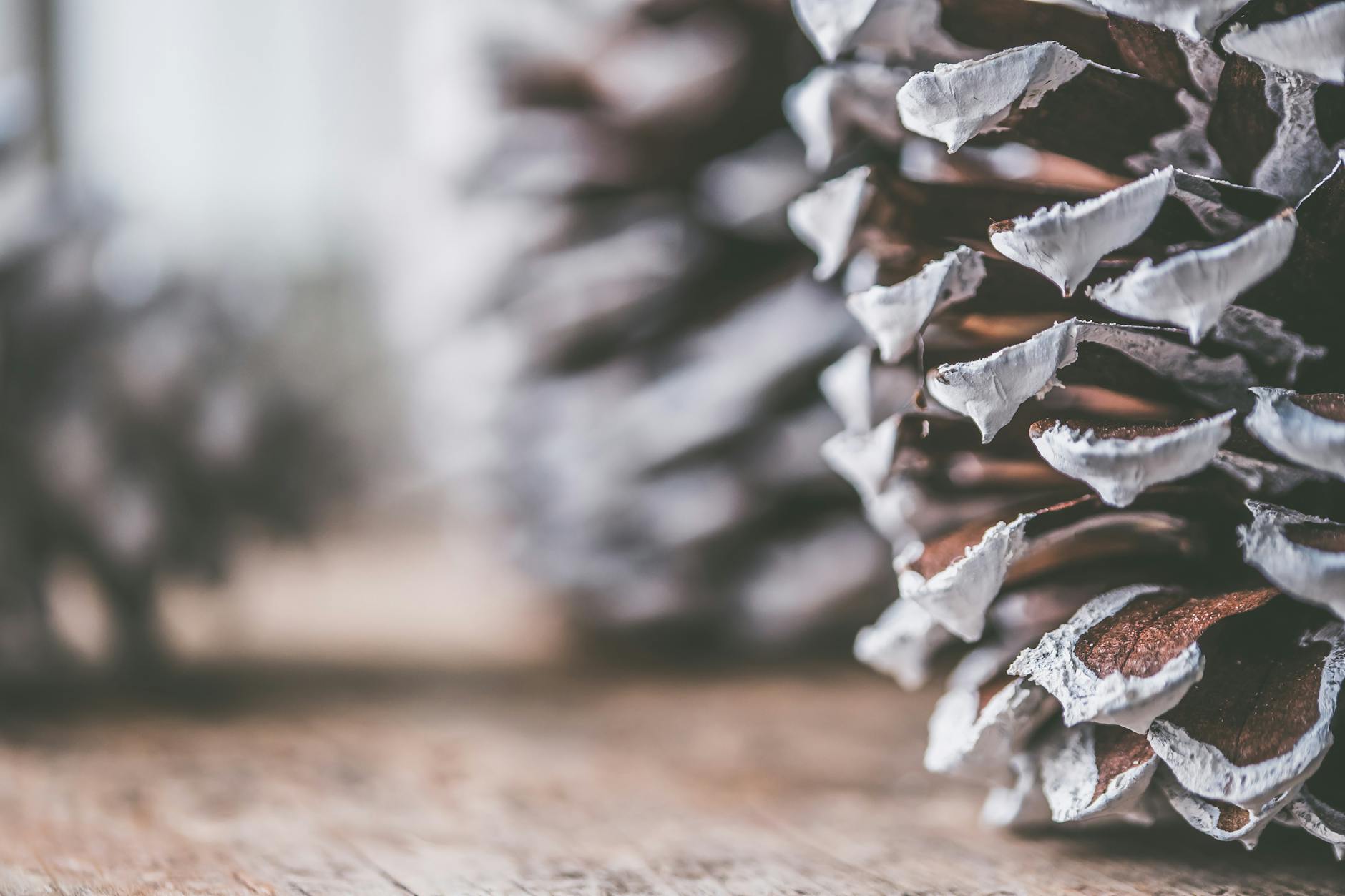
Pinecones make me think about Christmas and forests and snow. And pinecones also make me think about seeds. Take a close look at your pinecone. Do you see any seeds on it? The seeds on a pinecone are very small and often hidden deep down on the scales next to the center of the pinecone.
Does anyone happen to know the name of the kind of trees that make pinecones? This kind of tree is called a gymnosperm which means “naked (or exposed) seed.” Gymnosperm seeds are very different from most every other kind of seed because there’s no covering or coating around the seeds.
And that’s where the importance of the pinecone comes in.
Pinecones protect seeds from the weather, being eaten by animals, or popping open too early in spring. Pinecones also provide nutrients, water, and a safe place for seeds to open up and grow at the right time. And pinecones help seeds to be put in good places for new trees to grow well without competition from other trees for sunlight, water, space, and nutrients. In other words, pinecones are like little seed nurseries where those “naked or exposed seeds” can safely sprout, grow, and mature.
Now let’s go back to the ideas of Christmas and pinecones.
Please keep the following points in mind while we’re talking about Jesus, Christmas, and pinecones – Jesus’ mother was a woman named Mary (see Luke 2:34). Yet when Jesus was born as a baby, He was fully God and fully man (see John 1:14); and even now, over 2000 years after His birth, no one can completely understand how Jesus could be God and man at the same time (see Isaiah 55:8).
Isaiah 11:1 tells us that Jesus was from the stock of Jesse. Stock of Jesse means that the human part of Jesus’ genealogy came down through His ancestors of Abraham, Isaac, Jesse, David, and 39 other Israelite men listed in Matthew chapter 1. You can think about someone’s genealogy as being a list of her father, grandfather, great-grandfather, great-great grandfather, and all the “fathers” (and “mothers”) all the way back to Adam and Eve (see Genesis 2:7).
People in Jesus’ time thought that someone’s genealogy was very important.
With this idea of genealogy, we can substitute the word “seed” for stock in description of Jesus as being from the stock of Jesse in that verse from Isaiah. Thus, Jesus could be considered as coming from the seed of the men listed in Matthew chapter 1. Most of these men in that list have stories in the Old Testament that display their faith or courage in trusting God to provide for them and protect them in some very hard places in life.
There are also four women listed in Jesus’ genealogy in Matthew chapter 1.
I think it’s fascinating that two of these four women weren’t Jewish. Rahab and Ruth were from countries that were enemies of Israel. Yet just like the Israelite men named in Jesus’ genealogy, Rahab and Ruth’s stories are listed in the Old Testament as examples of trusting God in situations that could’ve been deadly for them (see Matthew 1:5-6). These women who became one of the “seeds” of Jesus voluntarily exposed themselves to danger because they trusted God to provide and protect them in a place He set for just for them with His power.
God’s care for Rahab and Ruth was personal to them at just the right time and in the right way.
Rahab and Ruth believed God would give them what was needed when it was needed. God did exactly that for them. And He’s still doing that for people who believe in Him today (see Matthew 11:28-30).
God has a good plan for good for each and every person (see Jeremiah 29:11).
No one is just left out there on her own to try and figure things out by herself for herself (see Psalm 139:10).
God is near to every single person who calls out to Him for help and hope every single time she calls out to Him (see Psalm 145:16).
God’s hope and help are always strong and dependable like He is (see Romans 5:5).
We don’t have to work to earn His love or buy His grace (see I John 4:15-19). He gives each of us a strong and vigorous love and grace that never changes or leaves or lets go of us when life gets hard (see Lamentations 3:22).
God provided and protected Rahab and Ruth then.
He will provide and protect us today.
God doesn’t change, even if situations in our lives change for the worse (see Hebrews 13:8). God was stronger than every person that tried to destroy Rahab and Ruth then. And today, God is stronger than anything or anyone in our lives could ever be (see 1 John 4:4).
Nothing is impossible for God (see Luke 1:37).
In faith, nothing can be impossible for us with God’s power at work in and through us (see Philippians 4:13).
We can be women like Ruth and Rahab who trust God in big and small needs and in all kinds of situations, too. Because Rahab and Ruth trusted God then, He honored them forever by making them to be Jesus’ ancestors and by listing them in Bible, too (see Matthew chapter 1 and 2 Timothy 3:16). And for us, as Christ-followers or “little seeds of Jesus”, God gives us everyday opportunities to trust Him in a bold and naked faith which exposes the love of Jesus to everyone in our world today like Rahab and Ruth did with their faith in God many years ago.
With all of this in mind, I hope that you might now see pinecones as little reminders of how God does provide, protect, and set in place each person right where we are for His good plan for good for all of us (see Romans 8:28). God made pinecones to be little nurseries for gymnosperm seeds to pop open and grow vigorously at the right time. If we choose to trust God, He will make our lives into places where we can grow and thrive in faith in our Good God.
God wants us to believe that He is for us and with us, no matter what happens in our lives.
Please hear me on this – I don’t say any of this about God being there for us without knowing for myself that God does provide and protect. I’ve lived through some hard places in life, including the death of a child, being without a job, and battling cancer. But God has always protected and provided and set me in a place for His plan for good.
God always does what He says He will do in the promises He’s put in the Bible.
Just like He’s helped me to believe Him in faith, He wants to do the same for you to believe Him today, too.
And prayer is a very good place to start planting seeds of faith and hope into our lives and souls.
Written by and copyrighted to Beth Madison, Ph.D., 2025.


 Soul Scientist
Leave a reply to Coffey, David L Cancel reply